The Loudest Instrument Is Not Always the Lead
The loudest instrument is not always the lead. Learn to hear how melody, phrasing, and harmonic tension shape attention during a live concert.
The common mistake in live music is to assume the loudest instrument is leading. That shortcut can hide the way harmony, phrasing, and pauses shape what you hear. The loudest instrument is not always the lead; sometimes the most important change is in the musical ground beneath the tune.
In an ensemble, “lead” can mean the part that most strongly shapes a passage’s direction, not simply the player with the melody. A chord can make a phrase feel settled or uneasy. A bass note can change the meaning of a melody above it. Listening for these effects offers a way into the music that does not depend on tracking who has the tune.
How does harmony change what a melody means?
Harmony is the combination of notes sounding together, and it gives a melody a setting. A phrase can feel restful when its notes fit comfortably with the accompaniment. A change in the supporting chords can make the same kind of phrase feel suspended, tense, or pointed toward what comes next.
You can listen for the moment the background changes under a held note. Does the note suddenly seem more settled, or does it seem to ask for resolution? The melody may not become louder or busier, but the new harmony changes how the phrase lands.
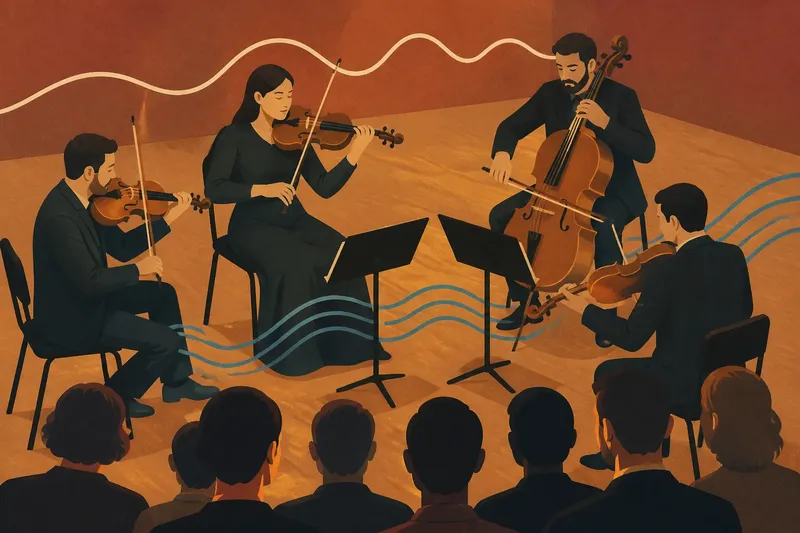
Imagine a string quartet playing a long violin note above a cello and two violas. In this invented situation, the violin holds steady while the lower parts move from a warm-sounding chord to a more unsettled one. The steps are simple: keep your attention on the violin note, notice the lower instruments changing beneath it, then listen for whether the violin’s eventual next note feels like release or continued tension. The expected result is a clearer sense of how the accompaniment affects the phrase, even though the violin remains the most prominent line.
What can the accompaniment tell you?
Accompaniment is the material that supports or frames another part. It may provide chords, rhythmic motion, or a contrasting line. Rather than treating it as background, listen for what it changes in the mood or direction of the passage.
- Notice a change under a held note. If the lower parts shift while the melody stays still, listen for a change in tension; if the melody keeps moving, follow its phrasing instead.
- Listen for a repeated chord pattern. If its timing stays steady, use it as a reference for the passage’s pace; if the pattern breaks, listen for a pause or a change in direction.
- Attend to a low note that changes. If the melody above it seems newly grounded or unsettled, notice how the bass affects the harmony; if the character stays much the same, focus on another change in the texture.
- Notice when a supporting part goes quiet. If the remaining sound feels exposed, listen to what the accompaniment had been adding; if the texture still feels full, another instrument may be carrying that function.
- Listen for a chord that sounds unexpected. If it creates a sense of waiting, follow the next few notes for a response; if it feels settled, notice whether the music lingers or moves on.
- Compare a phrase’s beginning and ending. If the accompaniment changes its character, listen for how that affects the phrase’s arrival; if it remains consistent, attend to the melody’s shape or articulation.
Why does a pause matter?
A pause changes the space around a sound. When several players stop together, the silence can make the last note seem to linger. When only one player pauses, the remaining instruments may reveal a rhythmic pattern or chord movement that was hard to notice before.
Listen for what continues during a rest. A soft repeated figure may keep the music moving, while a chord held by the ensemble may preserve a feeling of suspension. The pause is not empty; it can expose which musical details remain active.
How can you listen for harmony and texture during a concert?
What is the difference between melody and harmony?
Melody is a line of notes heard as a musical thought. Harmony is the combination of notes around that line, often supplied by several players together. The melody may be easy to hum, while harmony changes the feeling of its notes.
Can the bass affect a phrase without carrying the tune?
Yes. A bass note can alter the chord beneath a melody, changing whether the phrase sounds settled or tense. Listen to the low part when a melody holds a note or reaches the end of a phrase.
What should I listen for when the music gets quieter?
Notice which sounds remain and how they fit together. A quieter passage can reveal a repeated chord, a sustained note, or a change in harmony that was less apparent in a fuller texture.
How can I follow a passage without identifying every instrument?
Choose one audible feature, such as a held note, a repeated chord, or a pause. Follow what changes around it, then notice whether the passage feels more settled, more tense, or simply different.
What is the benefit of listening beyond the tune?
Listening to harmony and pauses gives you another way to follow ensemble music. You can hear how the players shape a phrase together, even when the melody stays with one instrument or is difficult to pick out.
At a concert, choose one held note and listen to the sounds beneath it. The main search phrase, “the loudest instrument is not always the lead,” points to a useful distinction: volume draws attention, but harmony can determine how a phrase feels. If you hear a change beneath the melody, stay with it long enough to notice whether it makes the music feel settled, suspended, or newly directed.