Before Printed Concert Programmes, How Did Listeners Know What They Heard?
Before printed concert programmes, listeners relied on speech, setting, and familiar music; learn what those clues could reveal—and what they could not.
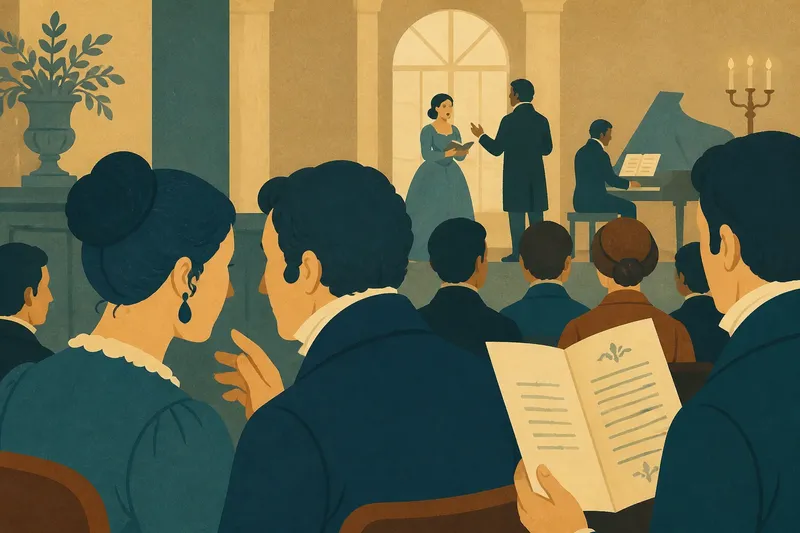
A common mistake is to imagine that concert audiences in every earlier period sat in silence, waiting for a booklet to explain the music. Before printed concert programmes became a familiar feature of many public concerts, listeners could encounter context through speech, the event’s purpose, and music they already knew. The details varied by time and place, so no single account fits every audience.
What could an event’s setting tell listeners?
A concert connected with a religious service, civic celebration, benefit, or private gathering came with clues about its purpose. The venue, organizers, and occasion could help listeners anticipate the kind of music they might hear. Those clues offered context, but not necessarily the titles or order of every piece.
Prior knowledge also mattered. A listener familiar with a performer, tune, or musical style could recognize something in the performance. Another person in the same room might have little such background. Audience members did not share one uniform level of knowledge or one reason for attending.
How did listeners learn what was being performed?
In settings where it was appropriate, a host, organizer, or performer could announce a work, name a soloist, or explain what would happen next. Conversation before or after a performance offered another route: someone might ask a more experienced listener about a piece or hear it discussed in a musical household.
These channels depended on speech, memory, and social contact. They could provide a useful clue without giving every listener a complete record of the event. A person who arrived late, for instance, might miss an announcement but recognize a familiar melody once the music began.
Say a listener attends a concert after a friend mentions that a singer will perform a song the listener knows. The listener recognizes the tune when it starts, but does not know its title or where it falls in the full program. That recognition helps connect the sound to prior experience; it does not answer every question about the performance.
What did printed programmes change?
A printed program could gather titles, performers, and the planned sequence in a form audience members could consult. Some programs also included explanatory text. This made information available in a shared written format rather than relying only on announcements or personal conversation.
The change was gradual and varied across places and kinds of performance. Printed programs did not displace spoken introductions or prior familiarity all at once. A listener could read a title, hear an announcement, and recognize a melody through earlier experience during the same event.
A printed list also made the planned order visible beyond the instant of performance. It could help a listener remember what came next or identify a work afterward. The page could not convey the timing, sound, or atmosphere of the live event.
How could someone follow unfamiliar music?
A listener could attend to audible changes without naming every musical detail. A recurring rhythm, a shift from soloist to ensemble, or a pause before a new section can provide a sense of direction. In vocal music, the words may offer another thread when they are clear or familiar.
Watching performers can help, too. A glance, breath, or change in posture may signal a cue or a shift in attention. These observations show how the performance is unfolding; they do not require the listener to identify a formal structure or decide what a passage means.
What do readers often ask about early concert programmes?
Were printed concert programmes used everywhere at once?
No single timeline applies to every place and performance setting. Practices varied, and spoken introductions or social knowledge could continue alongside printed material.
Did listeners need to know the music beforehand?
No. Familiarity could help, but announcements, the event’s setting, and attention to the sounds themselves could also provide points of orientation. What a listener knew depended on personal experience and the occasion.
What information did a printed programme provide?
It could identify works and performers and show the planned order. Some programs added explanatory notes, but their contents and detail varied.
Could a programme explain the whole performance?
No. A printed page could supply names and context, but it could not reproduce the live sound or tell each listener what to notice. Its role was to record and communicate information, not replace the performance.
The history of printed concert programmes is best understood as a shift toward one shared written source, not as a sudden move from ignorance to knowledge. Before that format became familiar in a given setting, listeners could draw on announcements, social exchange, the occasion, and remembered music. Each source offered a different kind of clue, and none supplied the whole experience.